
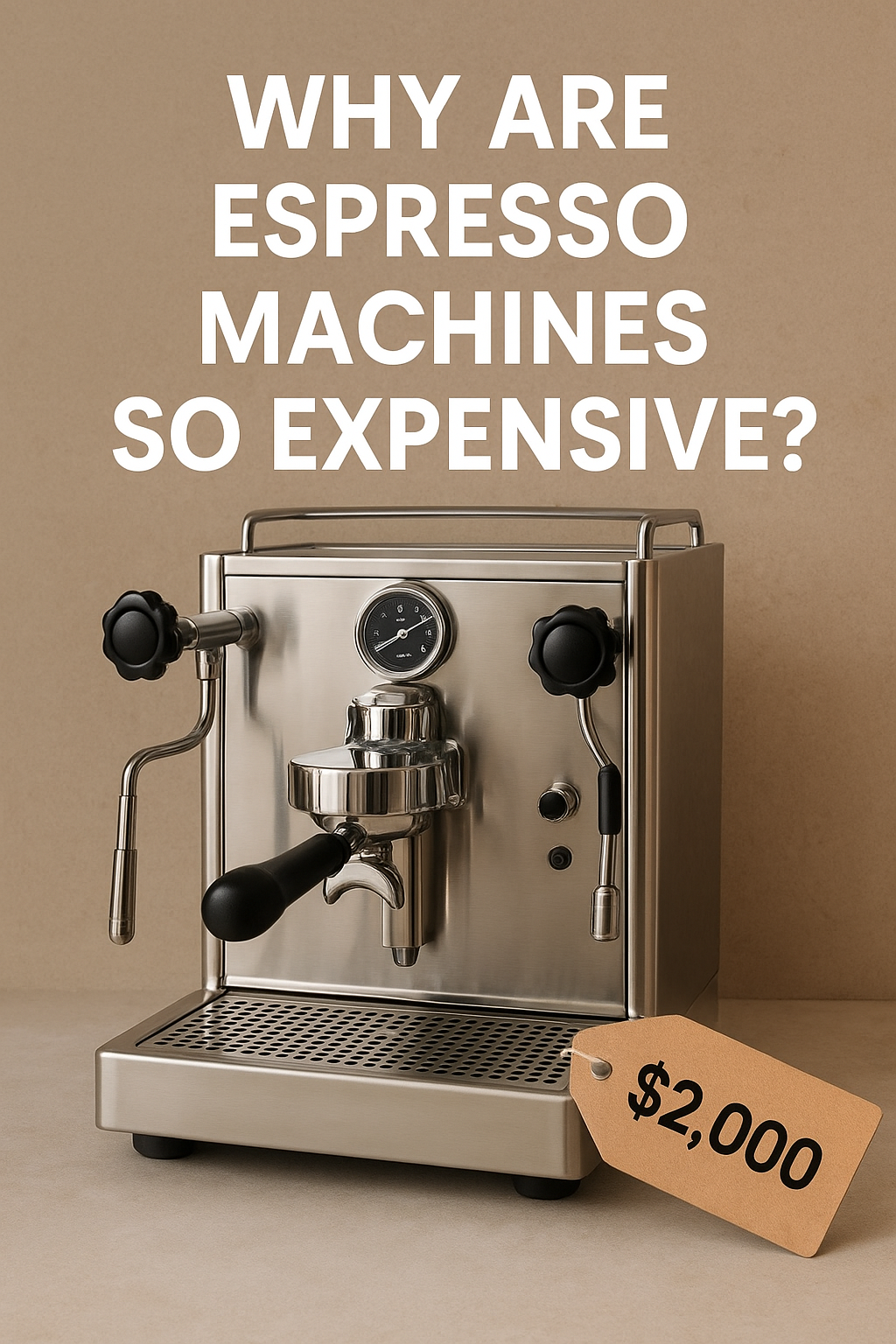
Why Are Espresso Machines So Expensive?
For coffee enthusiasts, few things compare to the rich aroma and silky crema of a perfectly pulled espresso shot. But as soon as you start shopping for a quality espresso machine, reality hits hard — why do these machines cost hundreds or even thousands of dollars?
Whether you’re a home barista eyeing a Breville or a café owner investing in a La Marzocco, the price tag isn’t just about luxury branding. The truth is, espresso machines are precision-engineered instruments, built to handle extreme conditions and deliver consistent results shot after shot. Let’s explore what makes them so expensive — from materials and engineering to market economics.
1. The Precision Engineering Behind Every Shot
Unlike a drip coffee maker, an espresso machine must force hot water through finely ground coffee at exactly 9 bars of pressure (≈130 psi) — about four times the pressure in a car tire. Maintaining this delicate balance between pressure, temperature, and flow rate requires meticulous engineering and calibration.
High-quality machines use:
- PID (Proportional-Integral-Derivative) controllers to maintain consistent water temperature within fractions of a degree.
- Vibratory or rotary pumps capable of delivering stable, repeatable pressure.
- Dual boilers (one for brewing, one for steaming milk) to avoid temperature fluctuations when switching functions.
These are not off-the-shelf components; they’re designed, tested, and assembled with precision — and that craftsmanship comes at a cost.
2. Premium Materials and Build Quality
The materials used in espresso machines significantly influence both performance and price.
- Boiler Materials:
- Entry-level models often use aluminum boilers, which heat quickly but don’t retain heat well.
- Professional models use brass or stainless steel, both of which offer superior heat stability and corrosion resistance.
- Copper is sometimes used in high-end Italian machines for its excellent thermal conductivity, though it’s costly to source and machine.
- Chassis and Components:
- Premium machines feature 304 stainless steel bodies, commercial-grade group heads, and brass fittings that withstand years of use under pressure.
- Cheaper models rely on plastic housings and less durable gaskets, which compromise longevity and performance.
These material upgrades not only raise manufacturing costs but also ensure decades of reliable service, especially in commercial environments.
3. Labor, Assembly, and Craftsmanship
Many premium espresso machines are hand-assembled in small batches, particularly from renowned Italian and Swiss manufacturers. Skilled technicians test and calibrate each unit to ensure perfect thermal stability and pressure control.
Unlike mass-produced drip brewers, espresso machines require complex assembly lines and manual quality checks. Even a slight misalignment in the group head or gasket can alter shot quality. This human touch — and the labor cost associated with it — adds significantly to the price.
4. Research, Development, and Brand Reputation
Top brands like La Marzocco, Rocket, and ECM invest heavily in R&D to push the boundaries of espresso technology. Innovations like:
- Dual PID systems
- Saturated group heads
- Pressure profiling
- App-based shot monitoring
…are the result of years of engineering, prototyping, and field testing.
These costs are reflected in the final retail price but also translate into greater consistency, reliability, and user control.
Brand reputation further amplifies value. When you buy a high-end machine, you’re paying for:
- Proven reliability over decades of operation
- Strong after-sales support and parts availability
- Long-term resale value
In other words, you’re not just buying an appliance — you’re investing in a professional tool.
5. Regulatory Compliance and Safety Standards
Espresso machines operate under high heat and pressure, so they must comply with rigorous international safety standards (UL, CE, NSF, etc.). Compliance involves:
- Electrical safety certifications
- Pressure vessel testing
- Food-grade material verification
Achieving these certifications is time-consuming and expensive, often requiring multiple prototypes and third-party audits. For small-batch manufacturers, this adds a significant layer of cost before the product even reaches consumers.
6. Economies of Scale — or Lack Thereof
Unlike mass-market coffee makers, espresso machines cater to a niche audience. Production volumes are low, meaning manufacturers can’t benefit from large-scale cost reductions.
Where companies like Keurig or Nespresso produce millions of units annually, boutique espresso brands might produce a few thousand. This smaller scale increases per-unit costs in sourcing, manufacturing, and logistics.
7. Home vs. Commercial Espresso Machines
The difference between a $500 home espresso machine and a $10,000 commercial model lies in durability and duty cycle.
| Feature | Home Machine | Commercial Machine |
|---|---|---|
| Pump Type | Vibratory | Rotary |
| Boiler | Single or Dual | Dual or Multi-Boiler |
| Build Material | Aluminum/Plastic | Brass/Stainless Steel |
| Duty Cycle | Intermittent | Continuous |
| Lifespan | 3–7 years | 10–20+ years |
Commercial machines are engineered to operate 12+ hours a day, maintaining stable pressure and temperature even under heavy use. That level of reliability and build integrity requires industrial-grade components — and a corresponding price tag.
8. The Emotional & Experiential Value
Finally, there’s the intangible factor: experience.
Owning a quality espresso machine isn’t just about making coffee; it’s about participating in the craft of espresso. The tactile levers, polished chrome, and steam wand hiss all contribute to a ritual that connects users to café culture and artisan craftsmanship.
This emotional value often justifies the investment for serious coffee lovers who want café-quality espresso at home.
☕ Final Thoughts
Espresso machines are expensive because they aren’t simple appliances — they’re precision-engineered systems built to perform under extreme conditions, using premium materials, expert craftsmanship, and cutting-edge technology.
From stainless steel boilers to PID controllers and hand-calibrated group heads, every element contributes to the final price — and to the quality of each espresso shot.
In short, you’re not paying for luxury; you’re paying for engineering excellence, reliability, and the perfect espresso experience.

Leave a Reply