Which roast of coffee is the strongest?
If you walk into a specialty cafe and ask for the “strongest coffee they have,” the barista might pause. Do you want the cup that tastes like a bold, smoky punch to the face? Or do you want the one that will keep your eyes open until 3:00 AM?
In the world of coffee roasting, “strength” is a bit of a moving target. To provide a definitive answer, we need to consider two distinct factors: Flavor Intensity and Caffeine Content.
1. Flavor Intensity: The “Perceived” Strength
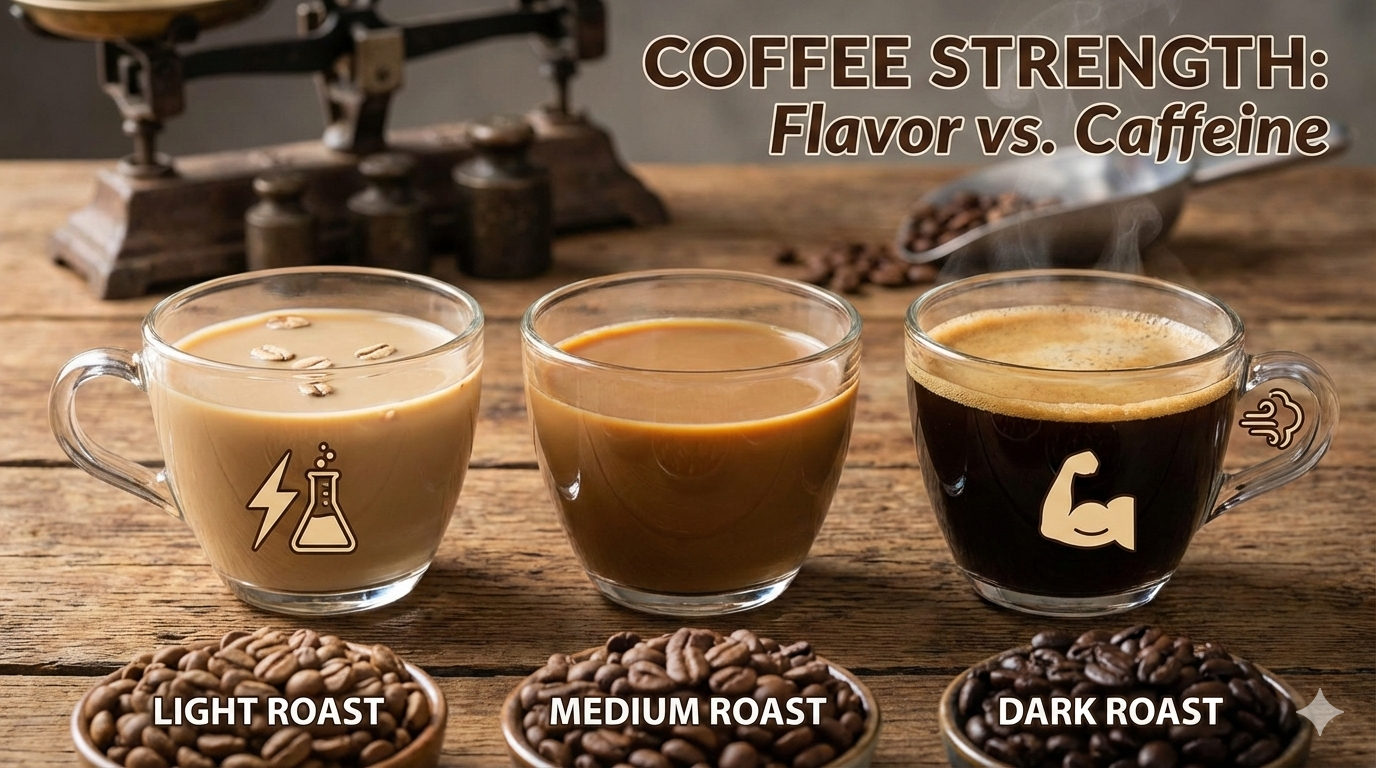
For most coffee drinkers, “strong” refers to the intensity of the flavor. If this is your definition, then Dark Roast is the clear winner.
As coffee beans roast, they undergo complex chemical changes, specifically the Maillard reaction and caramelization. The longer a bean stays in the roaster, the more its original “green” flavors (like acidity, fruit, and floral notes) are replaced by flavors created by the fire itself.
- Light Roasts: These are roasted for a short time. They are high in acidity and taste like the soil and climate where they grew. Think citrus, berries, or tea-like qualities.
- Medium Roasts: A balance of acidity and body. You’ll start to taste “roasty” notes like chocolate and toasted nuts.
- Dark Roasts: These are roasted until the sugars carbonize and oils surface. The flavor profile is dominated by smoke, bitterness, and a heavy mouthfeel. > Expert Tip: Because dark roasts have more “bitter” compounds, our brains perceive them as more powerful or “stronger,” even if the caffeine levels are nearly identical.
2. Caffeine Content: The “Chemical” Strength
If “strong” means the kick of energy you get, the answer gets a little more scientific. Does roasting “burn off” caffeine? Technically, yes—but only a tiny, negligible amount. Caffeine is remarkably stable at roasting temperatures.
The real difference in caffeine “strength” depends entirely on how you measure your coffee.
The Weight vs. Volume Dilemma
When coffee is roasted, the beans lose water and expand in size. This creates a paradox:
| Measurement Method | Which is “Stronger”? | The Reason |
| By Weight (Grams) | Light Roast | Light beans are denser and retain more water. One gram of light roast contains slightly more caffeine than one gram of dark roast because the dark roast has lost more mass. |
| By Volume (Scoops) | Dark Roast | Dark roast beans are “puffy” and larger. If you use a scoop, you are actually putting fewer (and lighter) beans into your brewer compared to a scoop of dense light roast. |
The Verdict on Caffeine: If you use a scale to brew (which we recommend!), a Light Roast will technically provide a slightly higher caffeine hit. If you use a scoop, the difference is so small you likely won’t feel it.
The Ultimate Summary: Which Should You Choose?
To find your perfect “strong” cup, identify what you are actually looking for:
- Choose Dark Roast if: You love a heavy, bold, bitter, and smoky flavor profile that stands up well to cream and sugar.
- Choose Light Roast if: You want a complex, acidic, and vibrant cup with the highest possible caffeine concentration by weight.
- Choose Medium Roast if: You want the best of both worlds—decent body with enough caffeine to get you through the morning.
Which roast is right for your brewing setup?
The “strength” of your coffee also depends heavily on your brew method—an espresso and a French press will treat the same bean very differently.
The Verdict on Caffeine: If you use a scale to brew (which we recommend!), a Light Roast will technically provide a slightly higher caffeine hit. If you use a scoop, the difference is so small you likely won’t feel it.

Leave a Reply